
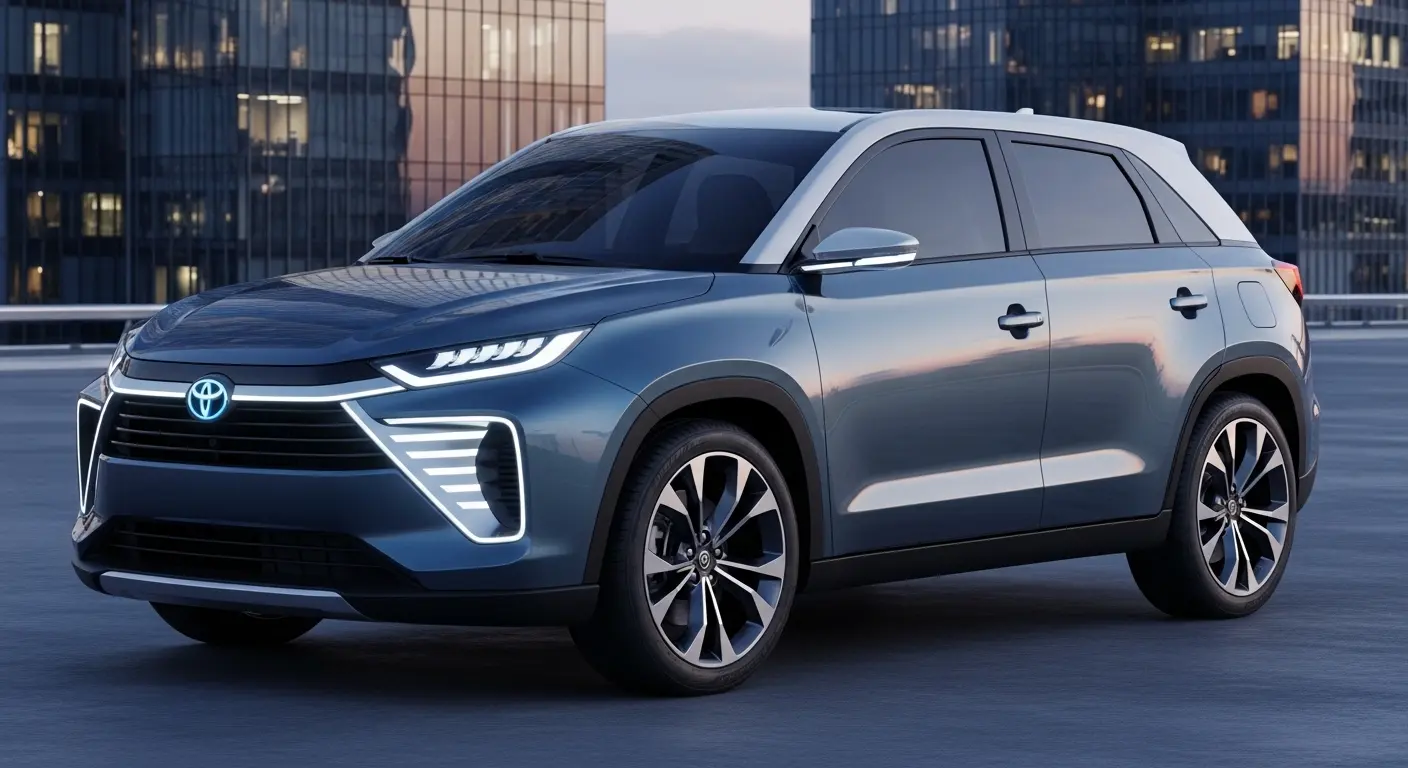
Toyota Urban Cruiser Ebella Review
Strong on Practicality, Light on Excitement – Will Price Make the Difference?”
Toyota has officially stepped into India’s fast-growing electric SUV segment with the Urban Cruiser Ebella. Based heavily on the Maruti Suzuki eVX/E Vitara platform, the Ebella carries Toyota’s badge and styling tweaks but shares most of its mechanicals with its sibling. The big question: Is it just a rebadged EV or does it have its own identity.
Design & Road Presence
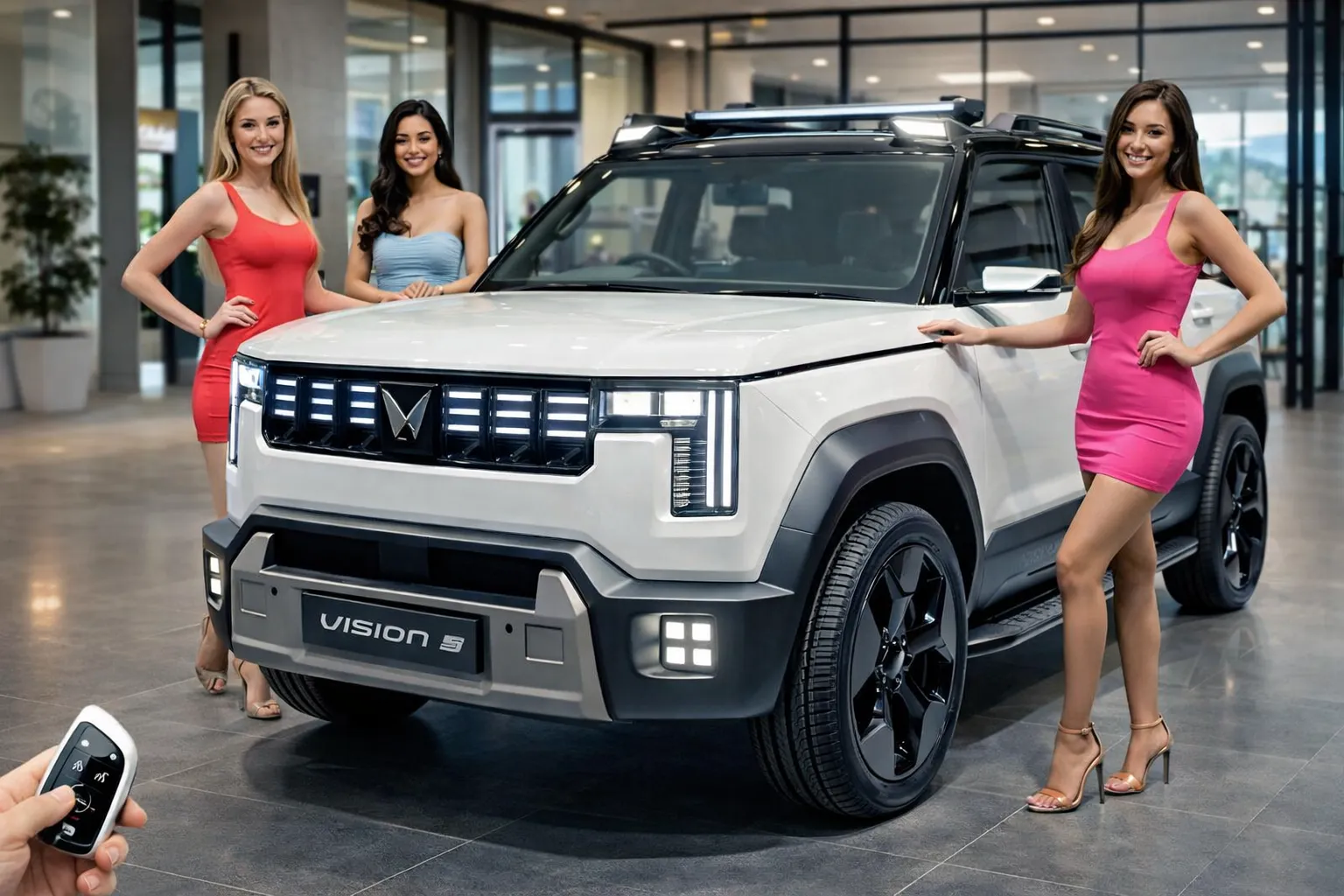
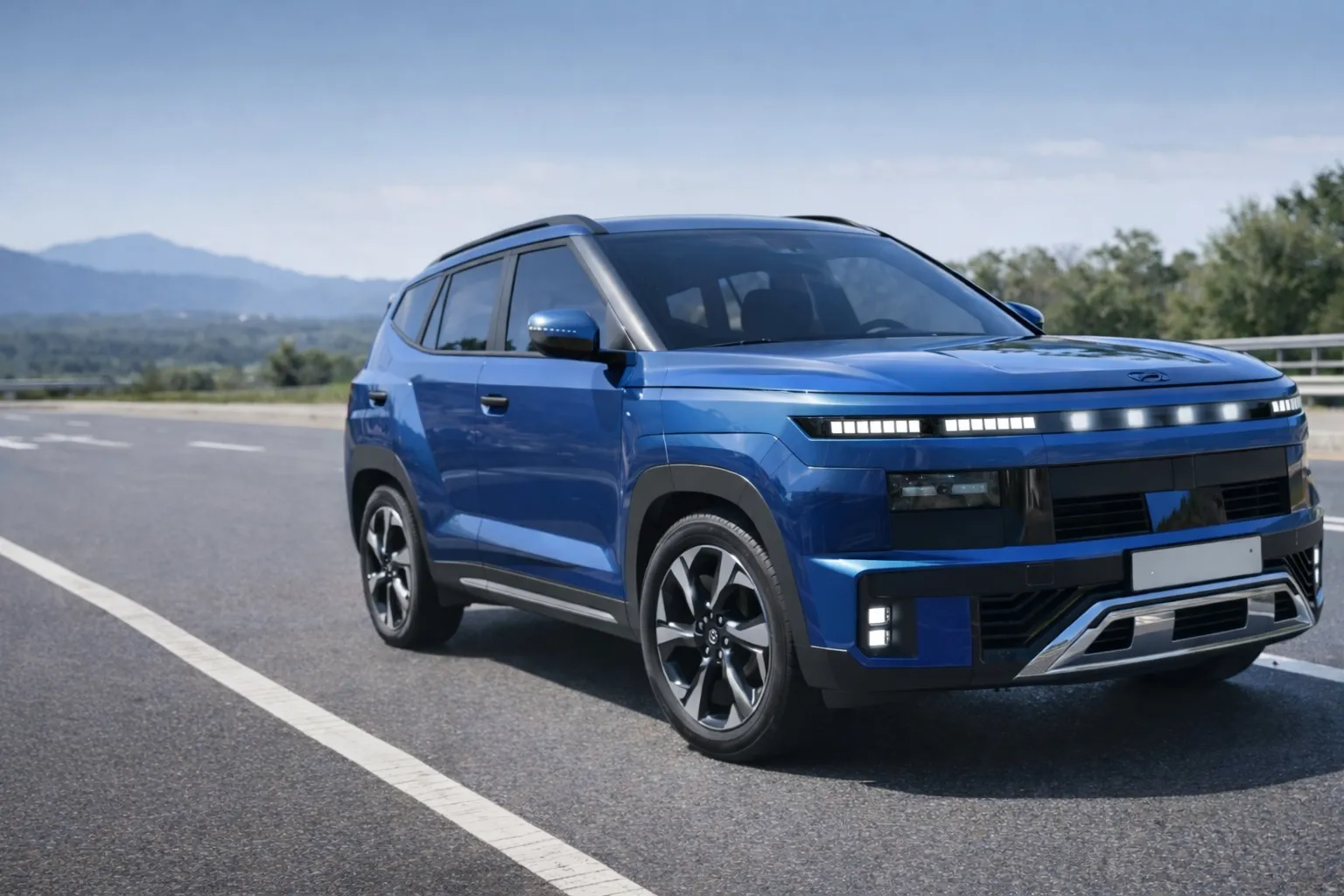
Toyota’s Urban Cruiser Ebella makes a confident first impression with its muscular crossover stance and strong urban-SUV appeal. While it shares its underpinnings with its Maruti sibling, Toyota has given the Ebella a distinct identity at the front. The fascia features a smiling LED headlamp design complemented by dotted DRLs, elements that may divide opinion but certainly add character. A neatly sculpted bumper and subtle chrome detailing enhance its premium positioning.
From the side, the Ebella carries impressive road presence thanks to its wide body, sharp character lines, and chunky black cladding along the wheel arches and lower doors. The 18-inch dual-tone alloy wheels add a sporty yet sophisticated touch, giving the SUV a planted and confident appearance.
At the rear, Toyota-specific badging and subtle lighting tweaks differentiate the Urban Cruiser Ebella from its Maruti counterpart. The overall design remains clean, modern, and purposeful rather than overly flashy.
Dimensionally, the Ebella stands out with its 2700 mm wheelbase — among the longest in the segment — promising better stability and interior space. Though slightly shorter and lower than the Hyundai Creta Electric, it is wider, which enhances its stance. With 184 mm ground clearance, it remains practical for Indian road conditions.
Overall, the Toyota Urban Cruiser Ebella’s design may not be revolutionary, but it delivers a balanced mix of muscular styling, urban sophistication, and brand identity — enough to ensure solid road presence in a competitive EV segment.
Dimensions Comparison
In terms of proportions, the Toyota Urban Cruiser Ebella positions itself strategically within the mid-size electric SUV segment. While it may not be the tallest or the longest in its class, its dimensions reflect a well-balanced urban crossover designed for Indian conditions.
The Ebella measures slightly shorter in length and lower in height than the Hyundai Creta Electric, but it compensates with a wider body, giving it a more planted and muscular stance on the road. This added width enhances shoulder room inside the cabin while also contributing to better visual presence.
One of the standout figures is its 2700 mm wheelbase, which ranks among the longest in the segment, second only to the VinFast VF6. A longer wheelbase generally translates into improved rear legroom and better straight-line stability — both crucial for Indian buyers prioritizing comfort.
Ground clearance stands at 184 mm (unladen). While adequate for most city roads and mild rough patches, it is slightly lower than some of its direct competitors. However, the flat-floor EV architecture ensures optimal weight distribution and stability despite this.
At approximately 1.8 tonnes kerb weight, the Ebella is heavier than the top-spec Creta Electric by over 200 kg. This added weight is largely due to its battery pack and reinforced EV platform.
Overall, the Ebella’s dimensions suggest a practical, city-friendly SUV that balances space, stability, and urban maneuverability rather than aiming purely for segment dominance on paper.
Braking
The Toyota Urban Cruiser Ebella comes equipped with multiple regenerative braking modes, allowing drivers to recover energy while slowing down. By default, the system is set to a medium level, where deceleration feels gradual and natural — closely mimicking the behavior of a conventional petrol or diesel car.
However, the implementation is not without its drawbacks. One key limitation is that regen levels cannot be adjusted while driving. The vehicle needs to be stationary before changes can be made through the infotainment system. In Indian traffic conditions, where driving patterns change frequently, this can feel inconvenient.
Unlike some modern EVs, the Ebella does not offer single-pedal driving, meaning the vehicle will not come to a complete stop using regeneration alone. There are also no paddle shifters behind the steering wheel to quickly increase or decrease regen intensity on the move.
There is, however, a quick-access button on the center console that allows drivers to completely switch off regenerative braking if required.
In terms of feel, the transition between regenerative braking and mechanical braking is smooth, and the brake pedal response remains natural and confidence-inspiring — an area where the Ebella performs well. While the system works efficiently, a more user-friendly control layout would have enhanced everyday usability.
Range & Charging
The Toyota Urban Cruiser Ebella is offered with two battery pack options — 49 kWh and 61 kWh, with the larger unit aimed at buyers seeking extended driving range. Toyota claims a range of over 500 km (ARAI-certified) for the 61 kWh version, placing it competitively within the segment on paper.
However, real-world figures are naturally more conservative. Initial highway driving suggests an efficiency of around 6 km per kWh, translating to a practical driving range of approximately 350–370 km on a single charge, depending on driving style, traffic conditions, and climate control usage. City driving could potentially yield slightly better efficiency.
Charging Options
The Ebella comes equipped with multiple charging solutions:
- 3.3 kW AC home charger (standard)
- 7.2 kW AC charger (optional, at extra cost)
- DC fast charging support up to 67 kW
While the 67 kW DC fast-charging capability is adequate for urban and highway top-ups, it falls slightly short compared to some rivals that offer higher peak charging speeds.
With the standard home charger, a full charge will take several hours, making overnight charging the most practical solution for daily users. The optional 7.2 kW AC charger significantly reduces charging time for those with compatible home infrastructure.
Overall, the Toyota Ebella’s range and charging package appear competitive but not class-leading. Real-world usability remains solid, provided expectations are aligned with practical EV driving conditions rather than headline figures.
ADAS & Safety
The Toyota Urban Cruiser Ebella comes equipped with a suite of Advanced Driver Assistance Systems (ADAS) designed to enhance safety and reduce driver workload on both city roads and highways.
ADAS Features
- Adaptive Cruise Control – Helps maintain a set speed and distance from the vehicle ahead.
- Autonomous Emergency Braking (AEB) – Detects potential collisions and applies brakes if needed.
- Lane Keep Assist – Helps keep the vehicle centered within the lane.
- Blind Spot Monitoring – Alerts drivers to vehicles in adjacent lanes.
- Rear Cross Traffic Alert – Warns of approaching traffic while reversing.
These systems collectively elevate safety and bring the Ebella closer to what buyers expect in modern electric SUVs.
User Experience
While the ADAS hardware does a respectable job overall, the controls and activation settings are buried within the touchscreen menus rather than being easily accessible. Toyota thoughtfully allows drivers to manually switch ADAS functions on or off, which is helpful in crowded city traffic where systems may otherwise intervene unexpectedly.
In real-world usage, the ADAS functions perform reliably and are not overly intrusive, though their calibration doesn’t match the refinement seen in segment leaders like the Hyundai Creta EV. Still, the systems do what they’re expected to do — assisting confidently without frequent false interventions.
Safety Equipment
Alongside ADAS, the Ebella includes standard safety features commonly found in this segment, such as:
- Multiple airbags
- ABS with EBD
- Electronic Stability Control (ESC)
- ISOFIX child-seat mounts
- Tyre Pressure Monitoring System (TPMS)
Interior & Features
The Toyota Urban Cruiser Ebella welcomes occupants with a cabin that feels both premium and thoughtfully designed, showcasing quality materials and solid execution that one would expect from a mature global brand.
Design & Materials
Inside, the Ebella impresses with its use of soft-touch materials, rich brown-black color theme, and well-damped switchgear. The overall ambiance feels upmarket and refined, with attention paid to tactile surfaces — from the steering wheel to the padded dashboard — helping it feel more premium than some rivals at this price point.
Seating & Comfort
- Front seats are wide, supportive, and electrically adjustable, offering good comfort for city commutes and highway drives.
- The raised floor — a result of the EV architecture — means occupants sit with a slightly knees-up posture.
- Rear passengers benefit from a sliding and reclining bench that enhances comfort on longer journeys.
- Taller adults may feel slightly restricted in headroom, especially with the raised floor and roofline.
- A prominent center hump in the rear reduces middle-seat comfort, making longer stints less ideal for three adults.
Cabin Practicality
Storage is a strong suit here:
- Large bins and cubbies throughout the cabin
- A spacious storage bay beneath the dashboard
- Thoughtfully placed cup holders and door pockets
- A dedicated tray under the boot floor for the charging cable
- A full-size spare wheel under the boot floor adds peace of mind
Boot space is 306 litres, which is slightly on the smaller side for the segment but well-shaped, making it easy to carry luggage and daily cargo.
Infotainment System
Here’s where the Ebella gets mixed reviews:
- Physical buttons for climate control and steering-wheel controls are tactile and useful.
- However, the central infotainment UI feels unintuitive and cluttered.
- Many key functions are buried deep in menus rather than easily accessed.
- Controls like Auto climate require navigating into the touchscreen menu rather than direct button access.
Display & Visibility
The infotainment screen sits on a large gloss-black panel that unfortunately:
- Attracts fingerprints and dust
- Causes reflections, making visibility difficult in bright light
The positioning also means the driver has to shift focus between the screen and instrument cluster, which can be distracting.
Overall Cabin Experience
The interior of the Ebella feels class-leading in terms of build quality and material perception. It’s premium, quiet (aside from wind and road noise), and comfortable. But the infotainment experience and ergonomic choices hold it back from feeling as polished as it should in this segment.
In short, the Toyota Urban Cruiser Ebella’s interior is a blend of premium feel with real-world usability compromises — excellent in many ways, but in need of refinement where it matters most.
Boot Space
The Toyota Urban Cruiser Ebella offers a practical and well-shaped luggage area that suits everyday needs and weekend trips alike. With a boot capacity of 306 litres, it falls slightly on the smaller side compared to some rivals in the electric SUV segment, yet the space is efficiently packaged and usable.
The boot’s rectangular layout makes it easy to load luggage, and in tests the area comfortably accommodated three cabin-sized suitcases with room to spare for smaller bags or daily essentials. Thoughtful attention to practicality extends to the dedicated tray beneath the boot floor for storing the charging cable, ensuring that the main cargo space stays uncluttered.
A notable highlight is the inclusion of a full-size spare wheel located under the floor, a rarity in many electric vehicles. This feature not only adds confidence for long distance travel but also keeps tools and spares well-organized without eating into luggage space.
However, due to the raised battery floor, there is a noticeable step-up from the boot floor, meaning heavier luggage may require a little extra effort to lift in and out. Still, the Ebella’s boot remains practical, user-friendly, and well-designed for family use.
In summary, while the 306-litre boot isn’t class-leading in terms of sheer volume, its shape, usability, and thoughtful storage solutions make it a strong practical point of the Toyota Urban Cruiser Ebella.
Pros & Cons
Pros
- Premium Interior Quality – Soft-touch materials, good fit and finish, and refined cabin feel.
- Comfortable Seating – Wide, supportive front seats with electric adjustment; rear seats slide and recline.
- Strong Road Presence – Muscular crossover stance with stylish 18-inch dual-tone alloys.
- Long Wheelbase – 2700 mm wheelbase provides stability and spacious feel inside.
- Smooth Driving Experience – Linear power delivery makes everyday driving comfortable and predictable.
- Good Usability – Light steering and tight turning radius make city maneuvering easy.
- Natural Brake Feel – Confident and intuitive braking response.
- Well-Shaped Boot – 306 litre boot with full-size spare and dedicated charging cable tray.
- ADAS Safety Suite – Includes modern safety aids, which can be manually controlled.
- Battery-As-A-Service & Buyback Options – Flexible ownership choices (subject to final terms).
Cons
- Infotainment UI Usability – Cluttered menus and unintuitive layout hamper everyday use.
- Regen Braking Control Limitations – Cannot adjust regen on the move; no single-pedal driving.
- Firm Ride Quality – Suspension can feel stiff and unsettled over sharp road irregularities.
- Noise Ingress – Road and wind noise enter the cabin more than expected.
- Moderate Real-World Range – Practical range (~370 km) falls short of claimed figures.
- Lower Fast-Charging Speed – 67 kW DC fast charging isn’t class-leading.
- Compact Boot Volume – 306 litres is smaller than some rivals in the segment.
- Rear Middle Seat Comfort – Prominent floor hump reduces comfort for center rear passenger.
- Lacks “X-Factor” – While sensible, it doesn’t excite or stand out in a competitive EV market.
Pricing
Toyota has opened bookings for the Urban Cruiser Ebella with a token amount of ₹25,000, while official prices are expected to be announced soon. Industry estimates suggest the electric SUV could be priced between ₹18 lakh and ₹24 lakh (ex-showroom), depending on the battery pack and variant.
The 49 kWh base variant is likely to start at the lower end of the range, while the fully loaded 61 kWh version could touch the ₹24 lakh mark. Toyota is also expected to offer a Battery-as-a-Service (BaaS) option and a 60% buyback assurance plan, which may reduce the upfront ownership cost.
Ultimately, pricing will play a crucial role in the Ebella’s success. If Toyota positions it aggressively against rivals like the Tata Nexon EV and Hyundai Creta Electric, it could attract strong interest in the growing EV market.
Final Verdict
The Toyota Urban Cruiser Ebella enters India’s electric SUV battlefield with a strong sense of purpose — blending practicality, premium build quality, and Toyota’s trusted brand value. While it does not dramatically reinvent the EV segment, it offers a well-rounded package that should appeal to everyday buyers looking for a sensible and comfortable electric vehicle.
The Ebella impresses with its smooth and usable power delivery, spacious wheelbase, and solid interior quality. Practical touches like a well-shaped boot, thoughtful storage, and confidence-inspiring brakes add to its everyday appeal. Its city-friendly handling and tight turning radius make urban driving easy, while highway manners remain composed.
However, the Ebella falls short in a few key areas. The infotainment system’s usability, limited regenerative braking controls, and noticeable road/wind noise prevent the cabin from feeling truly refined. The ride quality, while stable, leans on the firm side, and the real-world range falls below claimed figures. These compromises, combined with a lack of dramatic “wow factor,” mean the Ebella feels more rational than exciting.
Ultimately, the pricing will be the deciding factor. If Toyota positions the Ebella aggressively — especially with flexible options like Battery-as-a-Service and buyback assurances — it could become a practical choice for mainstream EV buyers. But if it lands too close to premium rivals like the Hyundai Creta Electric, it may struggle to stand out.
In summary:
1. A sensible, comfortable, and well-built electric SUV
2.Great for daily usability and long-term ownership confidence
3. Lacks standout excitement
4. Pricing will determine its market success
Verdict: *Ebella is a strong everyday EV — but not a segment game-changer.*
Toyota Urban Cruiser Ebella – FAQ
1. What is the Toyota Urban Cruiser Ebella?
It is Toyota’s first mass-market electric SUV in India, based on the Suzuki eVX/E Vitara platform.
2. What battery options are available?
The Ebella comes with two battery packs – 49 kWh and 61 kWh.
3. What is the claimed range of Ebella?
Toyota claims a range of over 500 km (ARAI) for the 61 kWh version.
4. What is the real-world range?
Expected real-world range is around 350–370 km, depending on driving conditions.
5. Does Ebella support fast charging?
Yes, it supports DC fast charging up to 67 kW.
6. Does it have ADAS features?
Yes, the Ebella offers Advanced Driver Assistance Systems (ADAS) for added safety.
7. Is single-pedal driving available?
No, the Ebella does not offer single-pedal driving mode.
8. What is the boot space capacity?
It offers 306 litres of boot space.
9. What is the expected price in India?
The expected price range is ₹18–24 lakh (ex-showroom).
10. Who are its main competitors?
Key rivals include the Hyundai Creta Electric, Tata Nexon EV, and other mid-size electric SUVs.