
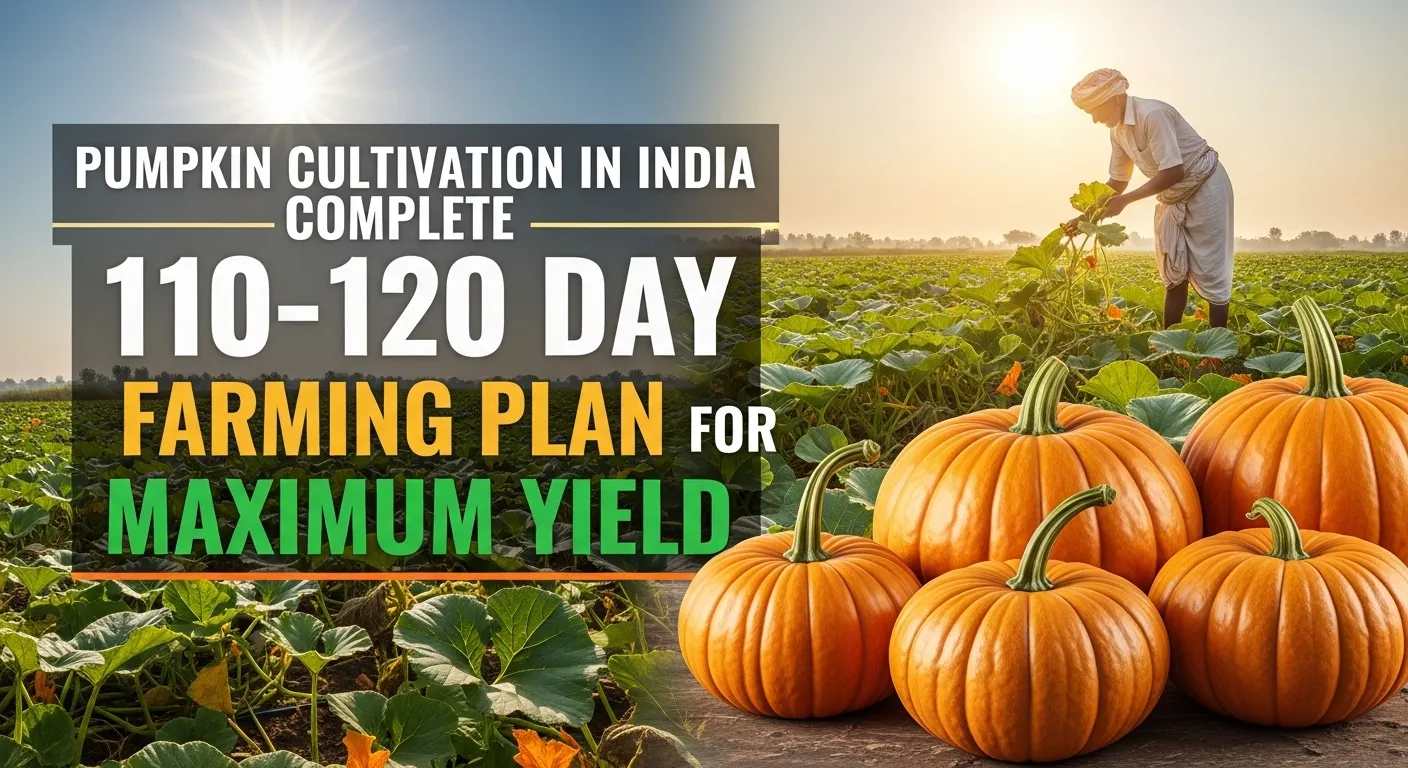
Pumpkin Farming Gains Popularity Among Indian Farmers: 120-Day Crop Offering High Yield and Strong Market Demand
By Zoya | AgriCulture
In response to growing demand from farmers across various regions of India, pumpkin cultivation is rapidly emerging as a profitable short-duration vegetable crop. With a growing market in hotels, food processing units, and local vegetable markets, pumpkin—also known as kaddu or bhopla—is being adopted widely for its strong storage capacity, reliable yield, and relatively low input cost.
Agriculture experts suggest that pumpkin is a 110–120 day crop that can fit comfortably between two major cropping cycles. Its ability to produce high yields within four months makes it particularly attractive for farmers seeking quick returns.
Two Suitable Sowing Seasons
Pumpkin can be cultivated in two primary seasons:
- Kharif (Monsoon Season): Sowing during June–July.
- Late Winter / Early Summer: Sowing in December–January in mild climates or February–March in most regions.
Agronomists recommend completing sowing in the first fortnight of March to ensure harvesting before the onset of heavy rains. Timely sowing helps protect the crop from weather stress during flowering and fruit development stages.
Land Preparation: The Foundation of High Yield
Experts emphasize proper land preparation as the key to strong root development. Farmers are advised to:
- Plough the field thoroughly.
- Conduct straight and cross cultivation.
- Use a rotavator if soil clods remain.
- Prepare raised beds at 6–7 feet row spacing.
If the previous crop was chickpea, light cultivation is usually sufficient due to residual nitrogen in the soil. However, after crops such as banana or sugarcane, deep ploughing and organic manure incorporation are recommended.
Fertilizer Strategy
Since pumpkin is a short-duration crop, most nutrients must be supplied at the basal stage.
Recommended per acre:
- DAP: 1 to 1.5 bags
- Potash: 1 bag (up to 2 bags in light soil)
- Neem cake: 2–3 bags
- Micronutrient mix: 8–10 kg
- Magnesium sulphate: 10–15 kg
Raised beds of half to one foot height with side drainage channels ensure proper water management.
Seed Rate and Spacing
Spacing plays a crucial role in maximizing yield.
- Row to row distance: 6 feet
- Plant to plant distance: 2 feet
This spacing allows approximately 3,000 to 3,500 plants per acre.
Seed requirement ranges between 400–450 grams per acre, keeping extra seeds for gap filling in case of plant loss.
Seed Treatment Improves Germination
Pumpkin seeds have a hard outer coating. To improve germination:
- Soak seeds in water for three hours.
- Shade dry for 30 minutes.
- Treat with bio-fungicides like Trichoderma and Pseudomonas.
Under normal temperature conditions, germination occurs within 7–10 days. In colder weather, it may take up to 15 days.
Nursery Technique for Early Harvest
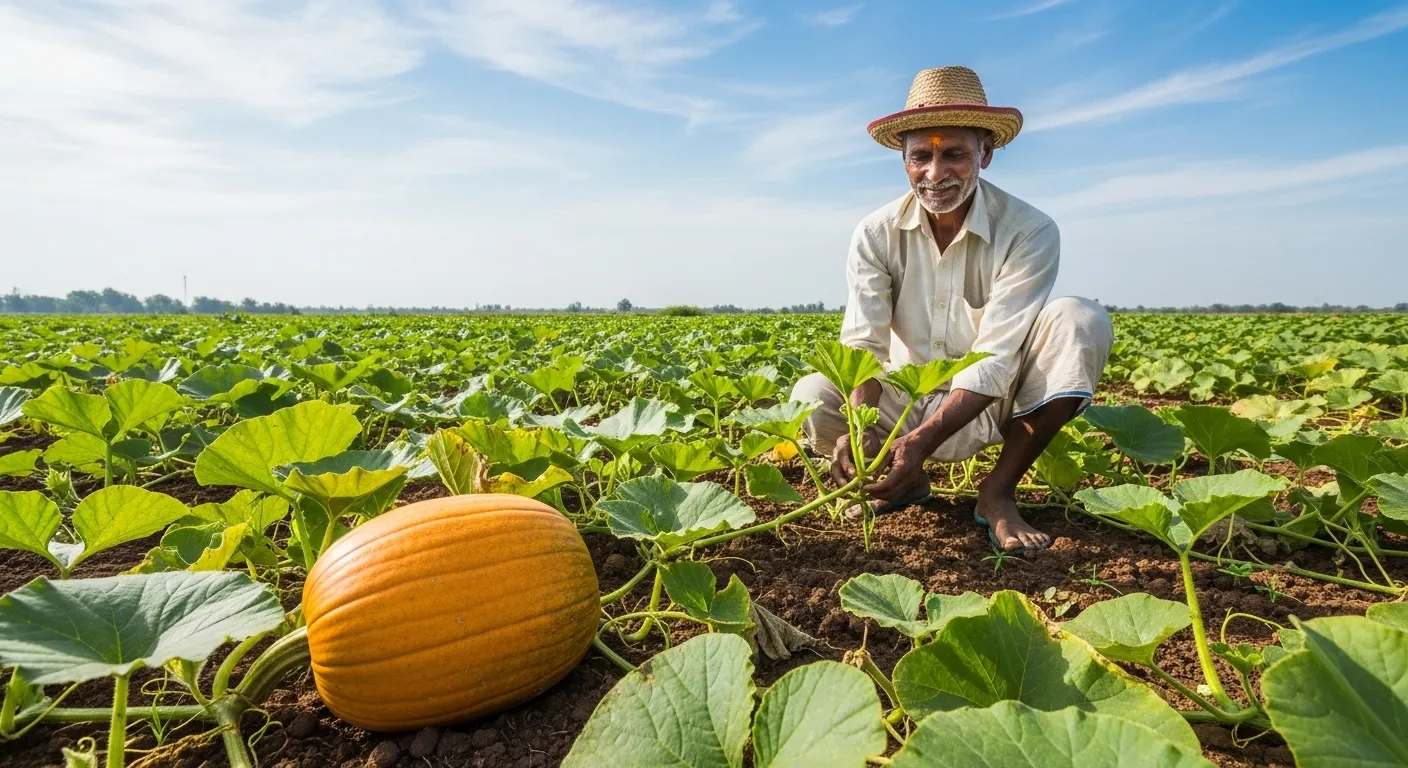
Some progressive farmers prepare seedlings in small cups filled with cocopeat 15–20 days before transplanting. This technique saves nearly 20 days in the overall crop cycle and helps target early market prices.
Pest and Early Crop Care
The Red Pumpkin Beetle is one of the most common early pests. Timely insecticide application during early growth stages prevents plant damage.
Farmers are also advised to train vines in one direction before flowering. This simplifies irrigation, fertilizer application, and harvesting.
Flowering and Fruit Development
Flowering generally begins 30–40 days after sowing. During fruit development (50–90 days), water management becomes critical.
Agriculture officers stress that moisture stress during this stage can reduce fruit size significantly. Pumpkins typically grow from a few grams to 4–6 kilograms within 30 days. Adequate irrigation ensures proper fruit filling.
Farmers should monitor soil moisture regularly and irrigate before severe dryness occurs.
Fertilizer Boost During Fruit Stage
At 60–70 days after sowing:
- Apply 10–15 kg urea per acre.
- Apply 25 kg potash.
For drip irrigation systems, water-soluble fertilizers like 13:45:00 and calcium nitrate can be used to enhance fruit size and quality.
Harvesting and Yield
Pumpkin is a single-harvest crop. Harvesting usually begins 100–120 days after sowing.
Average yield ranges between:
- 10–15 tons per acre under normal management.
- 18–20 tons per acre with advanced practices.
Each fruit typically weighs between 4 to 6 kilograms.
Market Demand and Storage Advantage
Unlike watermelon or muskmelon, pumpkin has strong storage capacity. It can be stored safely for 5–10 days without significant quality loss. This allows farmers flexibility in marketing.
With rising demand in hotels and food processing industries, pumpkin has become a stable market commodity. Additionally, its high Vitamin A content and nutritional value increase its consumer demand.
Expert Opinion
Agriculture specialists believe pumpkin farming is ideal for farmers seeking:
- Short-term crop cycle
- Moderate investment
- Good production potential
- Strong market demand
With proper irrigation and balanced fertilization, pumpkin cultivation can deliver consistent returns within four months.
Conclusion
Pumpkin cultivation is proving to be a reliable and profitable option for Indian farmers. With correct land preparation, timely sowing, balanced nutrient management, and proper irrigation during fruit development, farmers can achieve excellent yield and income.
As market demand continues to rise, pumpkin farming is expected to expand further across agricultural regions in the coming seasons.
Frequently Asked Questions (FAQs) – Pumpkin Farming
1. How many days does pumpkin take to mature?
Pumpkin is a short-duration crop that matures in 110 to 120 days after sowing, depending on the variety and climate conditions.
2. What is the best season for pumpkin cultivation?
Pumpkin can be grown in Kharif (June–July) and Late Winter/Early Summer (February–March). March sowing should be completed in the first fortnight for best results.
3. How much seed is required per acre?
Approximately 400–450 grams of seed per acre is required, considering spacing and extra seed for gap filling.
4. What is the ideal spacing for pumpkin farming?
The recommended spacing is 6 feet between rows and 2 feet between plants, ensuring proper vine growth and sunlight exposure.
5. How much yield can be expected per acre?
Under proper management, farmers can expect 10–15 tons per acre, and with advanced techniques, yields may reach 18–20 tons per acre.
6. What fertilizers should be applied at the basal stage?
At the time of land preparation, apply:
- 1–1.5 bags DAP
- 1 bag Potash
- 2–3 bags Neem Cake
- Micronutrients and Magnesium Sulphate as required
7. When is the critical irrigation stage in pumpkin?
The most critical period is 50 to 90 days after sowing, during fruit development. Water stress during this stage can reduce fruit size and yield.
8. How can farmers improve seed germination?
Soak seeds in water for 3 hours before sowing, then shade dry and treat with bio-fungicides like Trichoderma for better germination and disease protection.
9. What are the common pests in pumpkin farming?
The most common early pest is the Red Pumpkin Beetle, which can be controlled through timely insecticide application.
10. Is pumpkin a profitable crop for farmers?
Yes. Pumpkin is a short-term, high-demand crop with good storage capacity and strong market demand, making it a profitable option for farmers.
⚠ Disclaimer:
This article is published for educational and informational purposes only. The farming practices, fertilizer recommendations, irrigation schedule, and pest control methods mentioned are based on general agricultural guidelines and field research.
Actual results may vary depending on soil type, climate conditions, seed variety, water availability, and local pest situations.
Farmers are strongly advised to consult their local Agriculture Officer, Krishi Vigyan Kendra (KVK), or certified agronomist before applying any fertilizer or pesticide.
The publisher shall not be held responsible for any crop loss, financial loss, or damage arising from the use of the information provided in this article.